
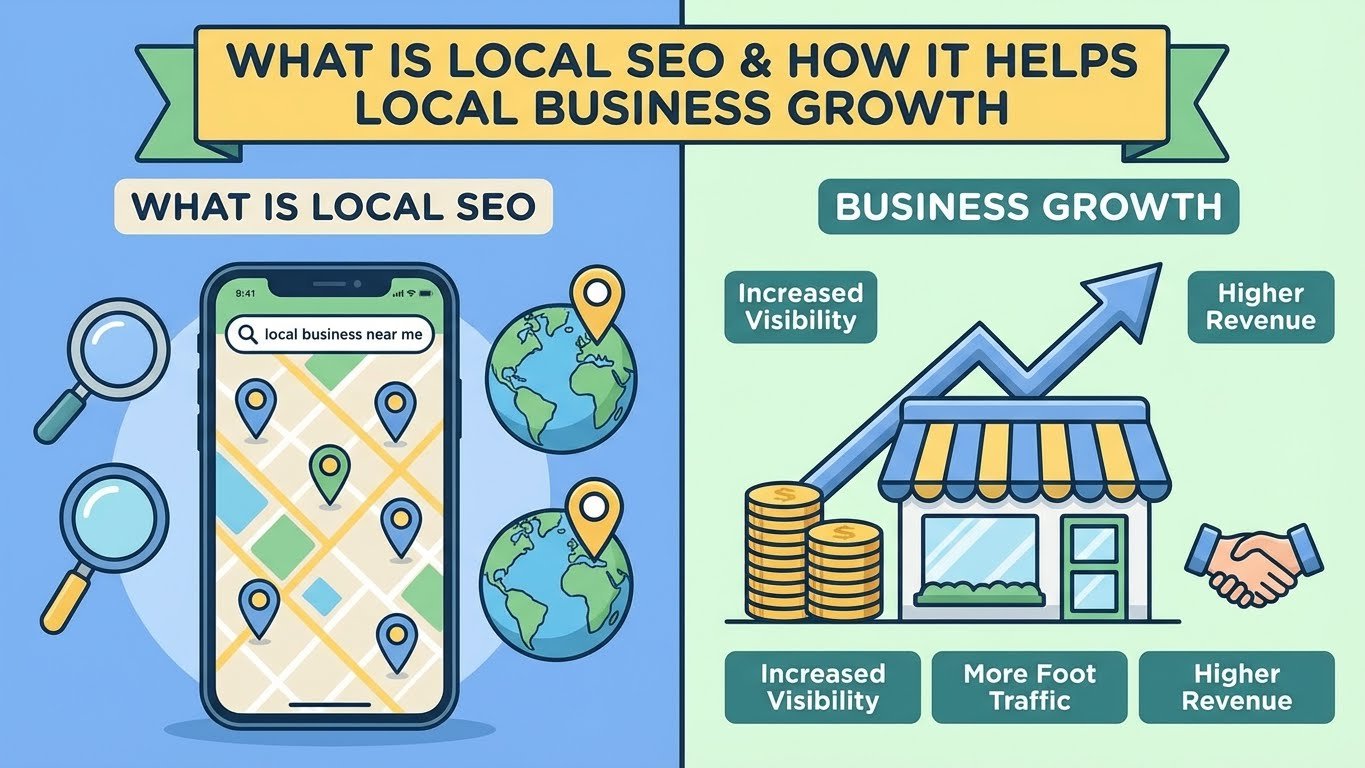
Local SEO is a set of search engine optimization techniques that help businesses appear in geographically relevant search results. When someone searches “bakery near me” or “plumber in Amsterdam,” local SEO determines which businesses appear in the Google Map Pack and organic listings.
Local SEO helps small businesses:
- Gain visibility in local searches
- Drive foot traffic and calls
- Build trust with customer reviews
- Compete with larger brands on a local level
📍 How Does Local SEO Work for Small Businesses?
🔎 What Makes Local SEO Different from Traditional SEO?
Unlike traditional SEO, local SEO focuses on geo-modified queries and proximity-based ranking. It favors businesses with verified local presence and consistent NAP (Name, Address, Phone) data.
🏪 Why Google Business Profile Is Critical
Google Business Profile (formerly Google My Business) influences:
- Map Pack rankings
- User reviews
- Click-to-call and direction requests
👉 Optimized profiles with photos, services, and FAQs improve engagement rates and local authority.
📞 How NAP Consistency Impacts Local Search
Your NAP data must be exactly the same across:
- Business directories
- Website footers
Inconsistent details confuse Google and reduce trust signals.
🧩 What Are the Core Components of Local SEO?
🔧 On-Page Local Optimization
Include your city and service keywords in:
- Page titles and H1s
- Meta descriptions
- Image alt tags
- Service area pages
Example:
“Affordable Plumber in Rotterdam | Emergency Services Available”
🗂️ Local Citations and Business Listings
List your business on trusted directories:
- Yelp, Apple Maps, Bing Places, Facebook, Foursquare
- Use tools like Moz Local or BrightLocal to manage listings
⭐ Reviews and Reputation Signals
Positive Google reviews affect local rank and user trust.
Encourage reviews through:
- SMS/email follow-ups
- QR codes at point of sale
- Reputation platforms like Whitespark
🔗 Local Link Building Techniques
Get backlinks from:
- Local news sites
- Business associations
- Sponsorships or event listings
These increase local page authority.
🛠️ How to Build a Local SEO Strategy That Works
📋 Step-by-Step Local SEO Checklist
- Claim your Google Business Profile
- Add complete business information (NAP, hours, photos)
- Create geo-optimized service pages
- Submit to local directories
- Collect and manage online reviews
- Build local backlinks
- Track performance in Google Search Console
🧰 Tools for Managing Local SEO
| Tool | Use Case |
|---|---|
| BrightLocal | Citation management, rank tracking |
| Moz Local | Directory sync and listing audits |
| Google Search Console | Organic traffic performance tracking |
| Screaming Frog | On-page SEO and crawl issues |
⚠️ Common Mistakes to Avoid
- Using inconsistent NAP info
- Ignoring mobile UX
- Keyword stuffing city names unnaturally
- Overlooking negative reviews
📈 What Results Can You Expect from Local SEO?
🕒 Timeframe to See ROI
You can expect improvements in:
- 3–6 months for Map Pack visibility
- 2–4 months for local keyword rankings
📊 Metrics to Track
- Map Pack impressions (from GMB insights)
- Click-to-call and direction requests
- Keyword rankings (geo-modified)
- Website traffic from local queries
📚 Real-Life Local SEO Case Studies
A local dental clinic in Utrecht gained 280% more calls in 4 months after optimizing their Google Business Profile and getting 40 new reviews.
A plumbing service in The Hague ranked in the top 3 map pack for “emergency plumber near me” after adding localized service pages and local backlinks.
❓ FAQs on Local SEO for Local Businesses
What industries benefit the most from local SEO?
- Restaurants, salons, medical clinics, home services, real estate agents — any business with a physical service area.
Can I do local SEO without a website?
Yes, but a website strengthens your local presence, especially for long-tail queries and conversions.
How do I rank in the Google 3-Pack?
Optimize your Google Business Profile, collect reviews, and build local citations consistently.