
In today’s digital-first age, the internet has become an inseparable part of our daily life—whether for learning, communication, entertainment, or business. From ordering food online to searching for services, reading news, buying products, or even applying for jobs—almost everything can be done with just a few clicks. At the heart of this online world lies a crucial tool: the website.
A website is no longer just a digital identity; it is a powerful asset that can represent ideas, brands, businesses, individuals, and even entire organizations around the globe. But what exactly is a website? And why is it so important today? This article will explain everything in detail—simple, clear, and beginner-friendly.
Let’s dive in.
What Is a Website?
A website is a collection of interconnected web pages that exist on the internet and can be accessed using a browser like Chrome, Firefox, or Safari. Each website has a unique address, commonly known as a domain name (example: google.com, wikipedia.org, amazon.com). When someone types this address into their browser, they are directed to that specific website’s online content.
In simpler words—a website is like a digital home. Instead of rooms, it has pages (Home Page, About Page, Contact Page, Blog Page, Products Page, etc.). Instead of physical visitors, it has online visitors from anywhere in the world.
A website typically consists of:
| Component | Explanation |
|---|---|
| Domain Name | Your website’s online identity (URL). |
| Hosting | The online space where website files are stored. |
| Web Pages | Individual sections like Home, Services, Blog, etc. |
| Content | Text, articles, videos, images, graphics, etc. |
| Design & Layout | How the website looks and feels to users. |
| Navigation | How visitors move from one page to another. |
Without a website, you cannot exist online in a long-term and professional manner. Social media is great—but it cannot replace a website, especially for business.
How Does a Website Work? (Simple Explanation)
Many people think creating or running a website is complicated, but in reality, the working process is simple:
- You purchase a domain name → Example: mybusiness.com
- You get a web hosting server to store your website files
- You build web pages using HTML/CSS/CMS like WordPress
- A user types your domain into a browser
- The browser sends a request to your hosting server
- The server returns data → Your website appears on screen
This process happens within seconds—creating a seamless experience for the visitor.
Types of Websites
Websites come in many forms, depending on their purpose. Some major categories include:
1️⃣ Business Website
Built for promoting and managing businesses online.
2️⃣ Personal Website / Portfolio
Showcases skills, achievements, and work samples.
3️⃣ E-commerce Website
Allows online shopping, transactions, product display, etc.
4️⃣ Blog / News Website
Publishes articles, tutorials, guides, and updates.
5️⃣ Educational Website
Includes courses, learning materials, school/university portals.
6️⃣ Non-Profit or Government Websites
Provides public information, services, and announcements.
7️⃣ Entertainment / Streaming Platforms
Movies, music, games, etc. (Netflix, YouTube)
A website can be anything—simple or complex—depending on your needs.
Do You Really Need a Website? Yes—Here’s Why
Whether you are a business owner, freelancer, student, or professional—a website gives you visibility, authority, and opportunities.
It works like an online shop that never closes.
If you belong to any of the following groups, you definitely need one:
| Who Needs a Website? | Why |
|---|---|
| Business Owners | To attract customers and grow sales |
| Service Providers | To showcase service portfolio & client reviews |
| Freelancers | To build trust and get more projects |
| E-commerce Sellers | To sell 24/7 without physical presence |
| Teachers or Coaches | To offer courses, resources, appointments |
| Content Creators | To publish blogs, videos, ebooks |
| Students | To showcase skills and build career credibility |
Today—not having a website means missing out on countless digital opportunities.
🌟 Top Benefits of Having a Website
Here are the biggest advantages of owning a website in 2025:
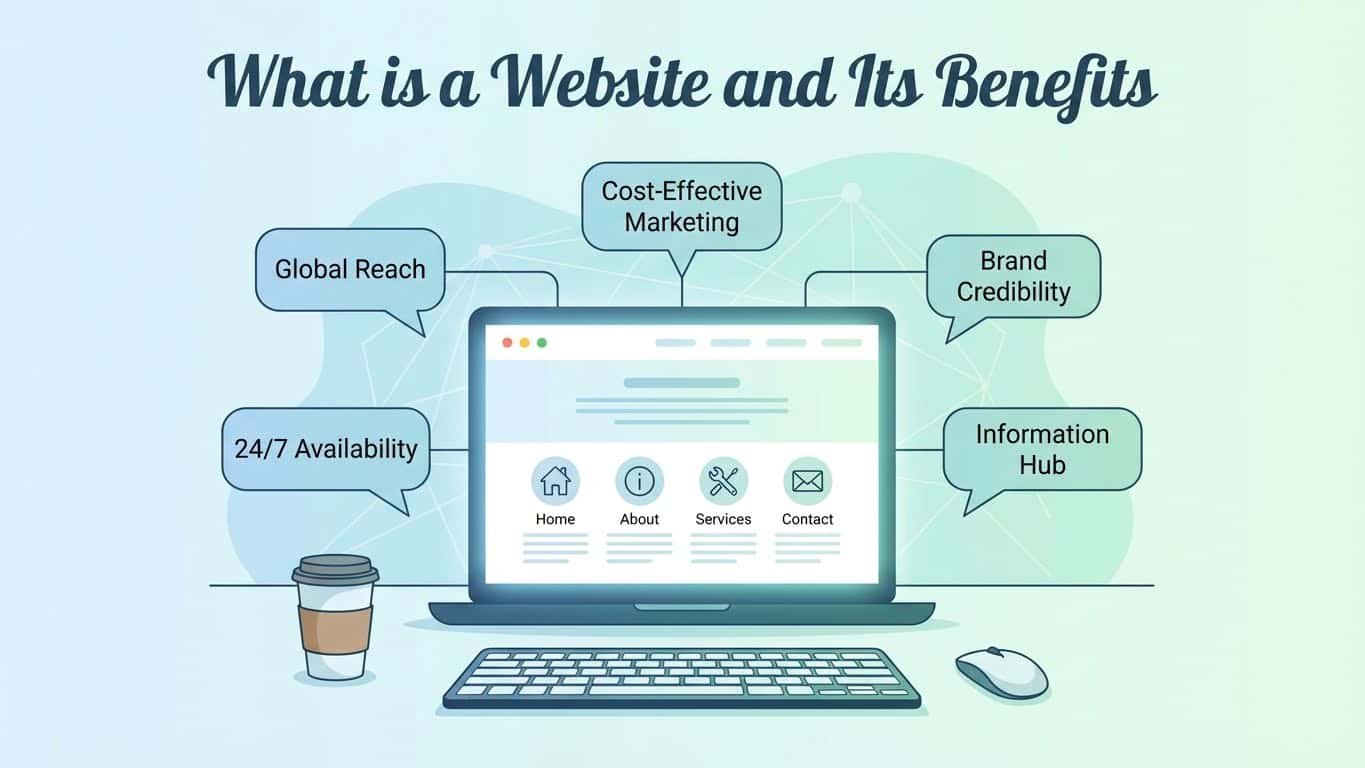
24/7 Online Presence
Your website is like a permanent digital showroom that stays open all day, every day. People can visit anytime—midnight, morning, or holidays. Unlike a physical business, there are no time limits.
If someone wants to know about your services at 3 AM, your website is available—even when you’re not.
Builds Credibility and Trust
A website increases your brand value and makes people trust your business more. In modern business, people often check a website before purchasing or making decisions.
Without one, many customers may think your business is not serious or reliable.
A professional website with:
✔ Clear information
✔ Contact details
✔ Testimonials
✔ Professional design
… instantly builds trust.
Wider Reach — Local to Global Visibility
A physical shop is limited to a city or area, but a website has no geographic boundaries. It can reach customers globally.
Whether you’re in Bangladesh, India, USA, or anywhere—your website can bring clients from any part of the world.
Helps Generate Leads and Clients
Websites can turn visitors into customers through:
- Contact forms
- Calls-to-action
- Live chat
- WhatsApp integration
- Lead magnets (eBooks, consultations)
Instead of chasing customers—customers come to you.
Showcases Your Products, Services & Portfolio
A website is the best place to display:
- What you offer
- Pricing and packages
- Work samples
- Case studies
Buyers make quicker decisions when they can see what they’re getting.
Supports Digital Marketing & SEO
A website is the foundation for:
| SEO | Google Ranking |
|---|---|
| Google Ads | Facebook Ads |
| Content Marketing | Email Marketing |
With proper SEO, your website can rank on Google and bring unlimited organic traffic.
7. Sell Products or Services Online (E-commerce)
You can sell anything:
- Courses
- Clothes
- Software
- Electronics
- Digital products
- Subscription memberships
People order → You deliver → You earn — 24/7.
Cost-Efficient Long-Term Marketing
Compared to traditional flyers, banners, or TV ads—websites cost very little to maintain. One domain + hosting + basic design can run for years. With proper strategy, the return on investment is massive.
Better Customer Support & Communication
Websites simplify interactions through:
- FAQ section
- Contact forms
- Messenger/WhatsApp chat
- Appointment booking system
Customers get answers instantly → satisfaction increases.
10. Track Visitor Behavior & Improve Performance
Using free tools like Google Analytics, you can see:
- How many people visited
- Which pages they viewed
- What device they used
- How long they stayed
- Where they came from
This data helps optimize content, marketing, and conversions.
How to Create a Website (Beginner Roadmap)
If you want your own website, here’s a simple step-by-step guide:
Choose Your Domain Name
This is your online identity.
Example:
businessname.com | yourname.com | brand.co
Step 2: Buy Hosting
Stores your website’s files online.
Popular hosting providers:
- Hostinger
- Bluehost
- Namecheap
- SiteGround
Choose How to Build Your Website
You can use:
| Method | Best For |
|---|---|
| WordPress | Blogs, business sites, portfolios |
| Shopify | E-commerce stores |
| Wix / Squarespace | Simple drag & drop sites |
| Custom Website Coding | High-level custom projects |
Step 4: Design Your Website
Focus on:
- Clean layout
- Easy navigation
- Fast loading speed
- Mobile responsive design
- Clear CTA buttons like Call Now / Buy Now / Contact Us
Add Content
Include essential pages:
| Page | Purpose |
|---|---|
| Home | Overview of business/brand |
| About Us | Story, experience, mission |
| Services/Products | What you offer |
| Contact Page | Phone, email, address, form |
| Blog Page | Articles for SEO & traffic |
Optimize for SEO
Use proper keywords, meta tags, internal linking, and fast hosting to rank on Google.
Publish & Promote
Share on social media, run ads, write blogs, build authority, and track growth through analytics.
Conclusion
A website is more than just a digital platform—it is an identity, a marketing tool, a communication channel, and a long-term investment. Whether you are a business owner, a freelancer, a student, or a professional, having a website gives you credibility, audience reach, and endless opportunities.
In a world where the internet is the new marketplace, having a website is not optional anymore—it is essential. If you don’t have one yet, today is the best day to start.
Your website can become your most powerful source of growth, income, and success.
If you want, I can also provide:
🔹 Full website content
🔹 SEO keywords & structure
🔹 Homepage + About + Service page writing
🔹 Blog posts based on any niche