
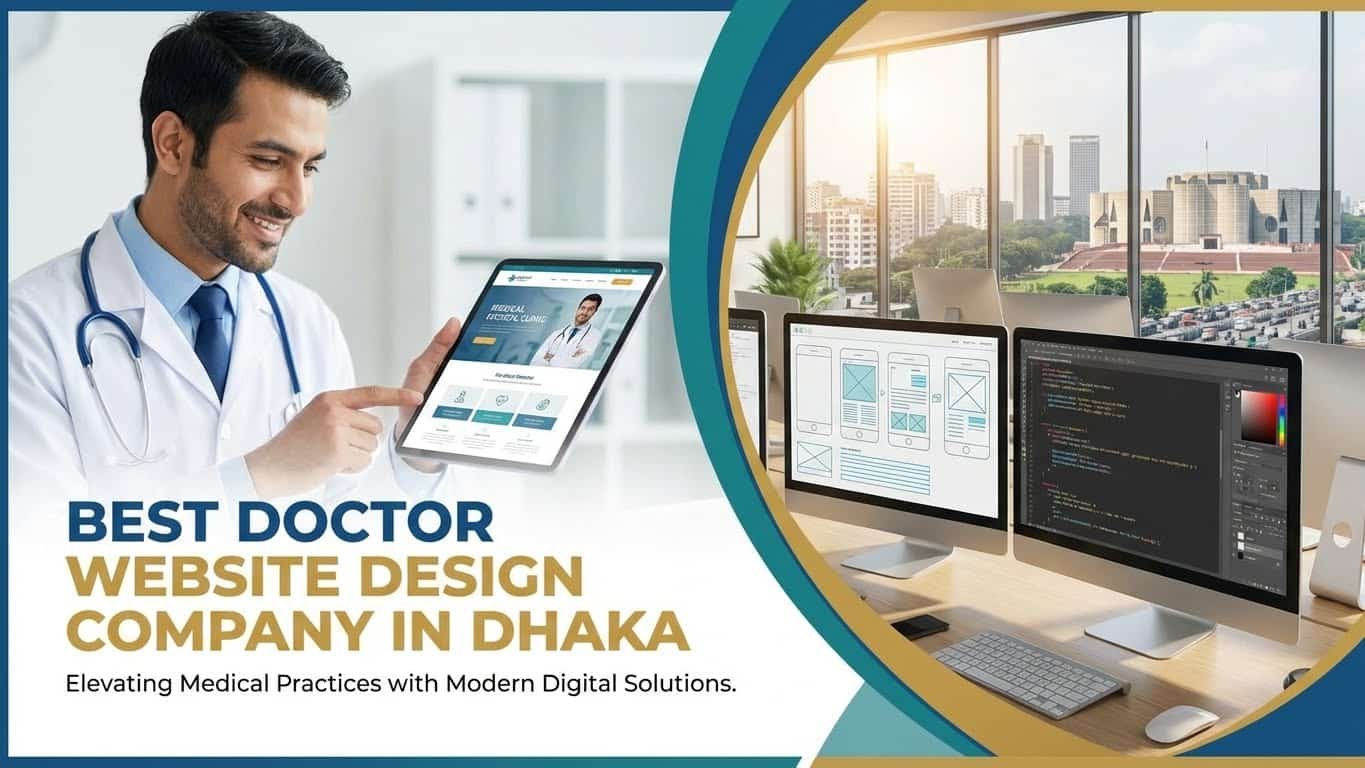
In today’s increasingly digital world, a strong online presence is no longer optional — it’s essential. For doctors and clinics in Dhaka, having a professional website can mean the difference between being discovered by prospective patients and remaining invisible in a sea of competitors. When someone searches online for “cardiologist Dhaka”, “child specialist near me”, or “clinic in Dhaka”, your website often becomes the first touchpoint. A well‑designed, informative, and user‑friendly website builds trust, demonstrates professionalism, and provides convenience — for both patients and the clinic.
This guide will walk you step by step through how to build (or redesign) a doctor or clinic website tailored for Dhaka: one that’s patient‑friendly, SEO‑optimized, mobile‑responsive, and designed to convert visitors into real appointments.
Why a Website Matters for Doctors/Clinics in Dhaka
1.1 Patients Search Online First
Most modern patients begin their healthcare journey online. Instead of relying solely on word‑of‑mouth or referrals, many now Google symptoms, look for nearby doctors or clinics, check reviews, and compare services. A website ensures you show up when they search. According to recent data, a significant portion of patients start with general internet searches when looking for healthcare services.
Build Credibility and Trust
Medical care is deeply personal — patients want to know who they’re trusting. A website helps you present credentials, specialties, experience, staff information, and patient testimonials. This helps build credibility.
Moreover, when a website is well‑designed, clean, and accessible, it gives patients confidence. A professional site signals care, reliability, and seriousness.
Convenience & Accessibility
With a website, patients can learn about your services 24/7 — even outside clinic hours. They can view services, read about specialties, check contact info, or even book appointments (if you integrate scheduling). This convenience often becomes a deciding factor for many.
Local SEO & Patient Acquisition
For a city like Dhaka, local visibility is crucial. By optimizing your website for local search (e.g. “clinic in Dhaka”, “doctor near me”), maintaining consistent contact/address info (NAP), and possibly listing on local directories or Google Business Profile, you significantly increase chances of being found by patients nearby.
What Makes a Great Doctor/Clinic Website — Core Principles
When building a medical website, you must design not just for looks — but for clarity, trust, usability, performance, and compliance. Here’s what you should prioritize:
Patient‑Centered Design & Usability
- Clear, intuitive navigation: Users — often stressed or in need — should quickly find what they want: services, contact info, appointment booking. Complex menus or cluttered layouts frustrate visitors.
- Responsive & mobile‑friendly design: Many visitors will use smartphones or tablets — especially in Bangladesh. A mobile‑optimized design ensures your website looks good and functions smoothly on all devices.
- Readable & accessible content: Use clear fonts, proper contrast, headings/subheadings, bulletpoints — patients should easily read and understand service descriptions, doctor profiles, and contact details.
Essential Website Features & Pages
Based on best practices for medical/clinic websites, you should include:
- Homepage: Clear hero section summarizing who you are — specialties, key value proposition, quick call‑to‑action (e.g. “Book Appointment”, “Contact Us”).
- Doctor / Team Profiles: Biographies, specialties, credentials, experience — helps build trust.
- Services / Treatments Pages: Each major service or specialty should ideally have its own page with description, benefits, FAQs if needed. This helps patients understand what you offer and improves SEO.
- Contact & Appointment Page: Include phone number, address, map (to show location), contact form, and ideally an online booking form if possible. Makes it easy for patients to reach you.
- Blog / Health Info / FAQ Section: Regular articles on common health issues, preventive care, clinic news — helps build authority, patient education, and improves search engine visibility.
- Testimonials / Reviews / Patient Feedback: Display genuine reviews or feedback to build credibility and social proof.
- Secure & Technical Foundations: Use HTTPS, ensure fast page loading, optimize images — crucial for performance, SEO, and user trust.
Content & Credibility (E‑E‑A‑T for Healthcare)
Because medical content is often classified under “Your Money or Your Life” (YMYL) by search engines, it’s vital that content demonstrates Expertise, Experience, Authority, and Trustworthiness (E‑E‑A‑T).
Use real credentials, provide accurate and up-to-date medical info, show authorship (doctor or credible medical professional), and avoid vague or generic advice. This helps build trust with patients — and search engines.
Performance, Security & Compliance
- Fast loading speed — slow sites frustrate users and increase bounce rates; optimize images, compress files, use caching.
- Secure HTTPS connection — especially important if you collect patient data or enable online booking or patient portals.
- Accessibility — ensure your site can be used by people with disabilities (screen readers, keyboard navigation, proper contrast) — good practice for inclusivity and often required for healthcare sites.
Local SEO & Content Strategy for Dhaka Clinics
If your clinic is in Dhaka, you must optimize your website to reach your local audience effectively. Here’s how:
Use Location‑Specific Keywords & Metadata
Include keywords/jargon your patients might use: e.g. “clinic in Dhaka”, “doctor in Dhaka city”, “cardiologist Dhaka”, “pediatrician near me Dhaka”, “Dhaka clinic contact”. Use these in your page titles, headings, meta descriptions, and content. This enhances relevance when someone searches locally.
Local Business Listings & NAP Consistency
Register your clinic on local listings (e.g. Google Business Profile, local healthcare directories) and ensure your Name, Address, and Phone number (NAP) are consistent across your website and listings. This increases chances of visibility in local “near me” searches.
Patient‑Focused Content Relevant to Local Needs
Create blog posts or FAQ pages around common local health issues (e.g. seasonal illnesses, common diseases, preventative care relevant in Bangladesh), clinic updates, health awareness. This serves your community and establishes you as a trusted local source.
3.4 Encourage Reviews & Social Proof
Encourage satisfied patients to leave reviews on your site or local listing — positive reviews boost credibility and improve local search ranking. Clinics with detailed service pages + reviews appear more trustworthy to both users and search engines.
Step‑by‑Step Implementation Plan (for a Dhaka Clinic)
Here’s a practical roadmap you can implement to build your clinic website:
- Define Your Goals & Services
- List services/specialties, doctor(s) info, clinic location(s), working hours, contact info, unique value proposition (e.g. 24/7 helpline, emergency service, specialized care).
- Plan Site Structure
- Decide which pages you need: home, about/doctor profile, services (with subpages if many), contact, appointment booking, blog/health resources, reviews/testimonials.
- Design & Wireframe
- Sketch a clean, intuitive layout; pick a color scheme and fonts; plan for responsive/mobile design.
- Content Creation
- Write clear service descriptions, doctor bios, about‑us, contact info, privacy policy (if needed), blog posts or FAQs (local health topics). Ensure content is accurate, authoritative, and friendly.
- Development & Technical Setup
- Build the site (preferably with a CMS or robust platform), ensure HTTPS, optimize for speed (compress images, caching), ensure mobile friendliness.
- SEO & Local Optimization
- Add metadata (titles, descriptions), use location‑targeted keywords, internal linking, service-specific pages, submit to local listings/directories, maintain NAP consistency.
- Add Conversion Features
- Integrate contact form or appointment booking widget/system; ensure contact info is clearly visible; optionally add live chat or WhatsApp link for instant queries.
- Testing & Launch
- Test on devices (mobile, tablet, desktop), check load speed, navigation, forms, readability. Fix bugs before launching.
- Maintenance & Updates
- Regularly update blog or health articles, update doctor info/services if changed, add patient testimonials/feedback, monitor website performance/security.
- Monitor & Improve SEO & Engagement
- Use analytics to track traffic, user behavior, conversion (appointments booked), and adjust content/SEO as needed.
Common Mistakes to Avoid
When building a doctor/clinic website — especially in a context like Dhaka or Bangladesh — there are pitfalls many fall into. Beware of:
- Cluttered or overly complicated design: Too much information, confusing navigation, or excessive graphics distract and overwhelm patients. Simplicity is key.
- Ignoring mobile users: Given widespread smartphone usage, a non‑responsive site will alienate many — leading to lost patients and poor SEO.
- Poor or generic content: Vague, marketing-heavy, or inaccurate medical information undermines trust. Avoid fluff — be clear, factual, patient‑oriented.
- No clear contact or booking option: If visitors can’t easily reach you or book an appointment, the website fails its purpose.
- Slow load time & technical neglect: Heavy images, non‑optimized assets, missing HTTPS — all hinder user experience and can discourage engagement.
- Neglecting local SEO & identity: Without location targeting (address, local keywords), your site may not appear when people nearby search for services.
- Ignoring compliance & security: For medical sites, handling patient data demands extra care. Ensure security especially if you collect personal info or provide patient portals.
Why This Approach Works — Evidence & Best Practices
- A well-designed physician website with doctor profiles, transparent services, booking capabilities and informative content significantly increases trust and engagement.
- Mobile‑friendly, responsive design is no longer optional — many patients browse on phones. Sites optimized for mobile see lower bounce rates and higher conversions.
- SEO and local optimization for healthcare websites not only improves discoverability but also helps clinics target high-intent patients (those searching for medical help nearby).
- Regular content (blogs, FAQs, patient information) improves the site’s authority and helps address patients’ concerns — making it more likely they contact you.
- Technical best practices — fast loading speed, secure HTTPS, clean structure — benefit both user experience and search engine ranking.
Sample Structure & Content Layout for a Dhaka Clinic Website
Here’s a suggested sitemap/structure for your website:
- Home
- Hero section (clinic name, tagline, quick CTAs)
- Brief about section
- Services overview
- Doctor(s) highlight / profile snippet
- Contact / quick appointment link
- About / Doctor(s) Profile
- Doctor’s qualifications, experience, specializations, photos
- Clinic history / mission / values (optional)
- Services / Treatments
- For each major service/specialty, a dedicated page — description, benefits, process, FAQs
- Blog / Health Resources
- Health articles, common conditions, preventive tips, patient education, seasonal illness advice, FAQs
- Contact / Appointment Booking
- Address, map, phone, email, working hours, contact form, online booking widget (if available)
- Testimonials / Reviews
- Patient feedback, success stories, as social proof
- Privacy Policy / Disclaimer (especially if collecting data or giving medical advice)
- Optional Features
- Live chat / WhatsApp support
- Patient portal (for patient records, reports)
- Multilingual support (English + Bangla) — helpful in Bangladesh context
Cultural & Contextual Considerations for Dhaka / Bangladesh
When building a website for a clinic in Dhaka or Bangladesh, it’s important to consider local context to make the site relatable, accessible, and trustworthy for local patients:
- Language options: While English may work for some, many patients prefer Bengali or Bangla-English hybrid. Offering content in both languages can widen reach and improve comfort.
- Mobile-first mindset: High smartphone usage in Bangladesh — ensure the design and functionality work well on low-end smartphones and slower internet connections. Avoid heavy image/video defaults.
- Local contact & address clarity: Many patients may rely on address, map, or local landmarks. Make sure address is clear in local terms (area, neighborhood) and map integration is accurate.
- Highlight affordability or payment methods: If you accept local payment options (mobile wallets, local payment gateways) or have affordable pricing — mention openly; this builds trust.
- Patient privacy and trust signals: In contexts where patients may be wary of privacy, ensure transparency — show credentials, clear disclaimers, contact details, and data security (HTTPS).
- Culturally appropriate visuals & tone: Use images, design elements, and tone that resonate with local sensibilities — friendly but professional; avoid overly “global corporate” visuals that may feel unrelatable.
Building a professional doctor or clinic website in Dhaka isn’t just about having a digital card — it’s about creating a trusted, accessible platform for patients to learn, reach out, and engage with your practice.
A well-designed website — clean layout, responsive design, clear navigation, doctor profiles, service pages, contact/booking options — paired with robust local SEO and patient‑focused content, can significantly increase your reach, patient trust, and bookings.
If you haven’t yet — start planning your website now. Even a simple site with essential pages can be a game changer. Over time, you can expand: add blog posts, patient portals, testimonials, multilingual support.
Remember: in today’s digital-first world, your next patient is likely Googling for care right now. Make it easy for them to find — and to trust — you.